Organizational background;
Community Empowerment for Inclusive Growth (CEIG) Foundation Uganda is a voluntary registered Community Based Organization that serves Christian Mission of providing God’s Mercy and Justice to marginalized persons in local communities through local Churches (St. James Church, Ndriba Parish, Diocese of Madi and West Nile in Uganda) to demonstrate God’s Love and Hope. St. James Church, provided office and other resources for CEIG Foundation Uganda to implement projects, and the Church has been pivotal in providing technical leadership on project initiatives especially in oversight, approvals, stakeholder/ beneficiary mapping and accountability. Above all the Church remains the greatest entry point to reach to marginalized persons.
Community Empowerment for Inclusive Growth Foundation Uganda strives to uplift and transform the lives of poor women, girls, persons with disability, and youth to advance a just, dignified, and safe environment to attain rights and development in Uganda. The functional strategic operational areas of the organisation are Inclusion, Community Education, Community-Based Rehabilitation, Community Health, Environmental sustainability, Sustainable Livelihoods, and WASH, which are delivered through an inter-faith collaboration for peaceful coexistence.
Project Background
Global data shows that persons with disabilities, face disproportionate protection risks and environmental barriers in situation of humanitarian crisis/development/ and or displacement and this non-access has greater impact. In some cases, the morbidity rate for persons with disabilities in disasters was estimated to be four times higher than for others. Persons with disabilities are NOT properly considered in the response. Access to services is a fundamental human right, yet sometimes persons with disabilities face a number of environmental and attitudinal barriers and are exposed to disproportionate protection risks. Persons with disabilities, particularly girls and women, might hence become more vulnerable to (sexual) violence and abuse than before displacement. It is acknowledged that environmental barriers
in combination with age, gender and disability factors exposing individuals, groups or communities to compounded vulnerability and expose certain communities, groups or individuals to higher protection risks and discriminative practices. In particular persons with disabilities are often left behind in crisis-affected communities, while being disproportionately exposed to violence, abandonment and neglect. Disability is an evolving concept which results from the interaction between people with impairments with attitudinal and environmental barriers, hindering respect of rights, access to humanitarian assistance and full protection.
In Uganda, UBOS Table 3.30 indicated Uganda has
Category / geography Total count Total percent
Central 1144902 20.7
Eastern 1675751 30.3
Northern 1400456 25.4
Western 1301479 23.6
5522588 100.0
Northern Uganda, Arua City inclusive has the highest number of persons with disability. The Persons with Disability suffer different types of disabilities and impairments as seen below with focus on Arua City;
Seeing difficulty — official district/city functional-domain observations
DISTRICT / CITY MALE COUNT MALE % FEMALE COUNT FEMALE % TOTAL COUNT TOTAL %
Arua City 6,322 3.9% 10,103 5.2% 16,425 4.6%
Hearing difficulty — official district/city functional-domain observations
DISTRICT / CITY MALE COUNT MALE % FEMALE COUNT FEMALE % TOTAL COUNT TOTAL %
Arua City 5,586 3.4% 7,993 4.1% 13,579 3.8%
Walking or climbing difficulty — official district/city functional-domain observations
DISTRICT / CITY MALE COUNT MALE % FEMALE COUNT FEMALE % TOTAL COUNT TOTAL %
Arua City 6,257 3.8% 9,987 5.1% 16,244 4.5%
In Uganda 51.3 % of the PWDs are out of school and 60.8 % are illiterate due to common access barriers identified by persons with disabilities include the followings; physical access barriers, attitudinal characterized by discrimination due to negative attitudes and financial barriers, most often the parents limited access to livelihoods opportunities for instance they cannot afford educate, transport Persons with Disabilities to and from the service points.
In education, Persons with Disability do not access Sexual Reproductive Health Rights as expected due to low engagement in the sector, unfair and traditional norms that does not allow sharing about the sexual related content in public and most often the Persons with Disabilities live in confined setting with limited access to information through teachers, parents and technologies. And parents have limited time to accompany their children to school.
Therefore, CEIG Foundation Uganda intends to implement ‘’ Strengthening access to Inclusive Education (SIE) among persons with Disabilities for 1 year to address the above gaps by supporting persons with disabilities in Arua Demonstration Primary School and Jiako Primary School in inclusive education, Sexual Reproductive Health Rights Services and Empower parents/guardians of the persons with basic livelihood support to sustain the education of children with disabilities worth cash assistance of Ugx 600,000 , this is expected to improve education, social welfare and protection of children with disabilities in schools and their dependants and improve nutrition status of persons with disability and the close family members.
Project Objective 1: Promote Sexual Reproductive Health Rights among Persons with Disability
Output 1: 60 in School Persons with empowered on Sexual Reproductive Health Rights
Implementation Methodology; CEIG Foundation Uganda will continue her approach of working and coordinating directly project activities with Arua Demonstration and Jiako Primary School in providing inclusive SRHR services to learners and other immediate socio-economic and physical needs of persons with disability. CEIG Foundation Uganda has long term experience/good working relationship with local communities, trust in transparent compassionate supports delivered and being a close service point eases quality implementation and access to services by local communities especially persons with disabilities. The initiatives will be coordinated with Schools that has sustained presence as a result of grounded establishment, and has ability to share resources to compliment and support the project implementation.
And the local authorities and key community opinion leaders, leadership of Union of person living with disability in Arua City, will support in identification of Persons with disabilities, and understand stringent measures or criterion that limits intended participants from accessing support. The project intends to bridge the gap of limited government support that sometimes does not reach the persons with disability.
A01.1.1: Training in school PWDS on inclusive SRHR services and Life skills.
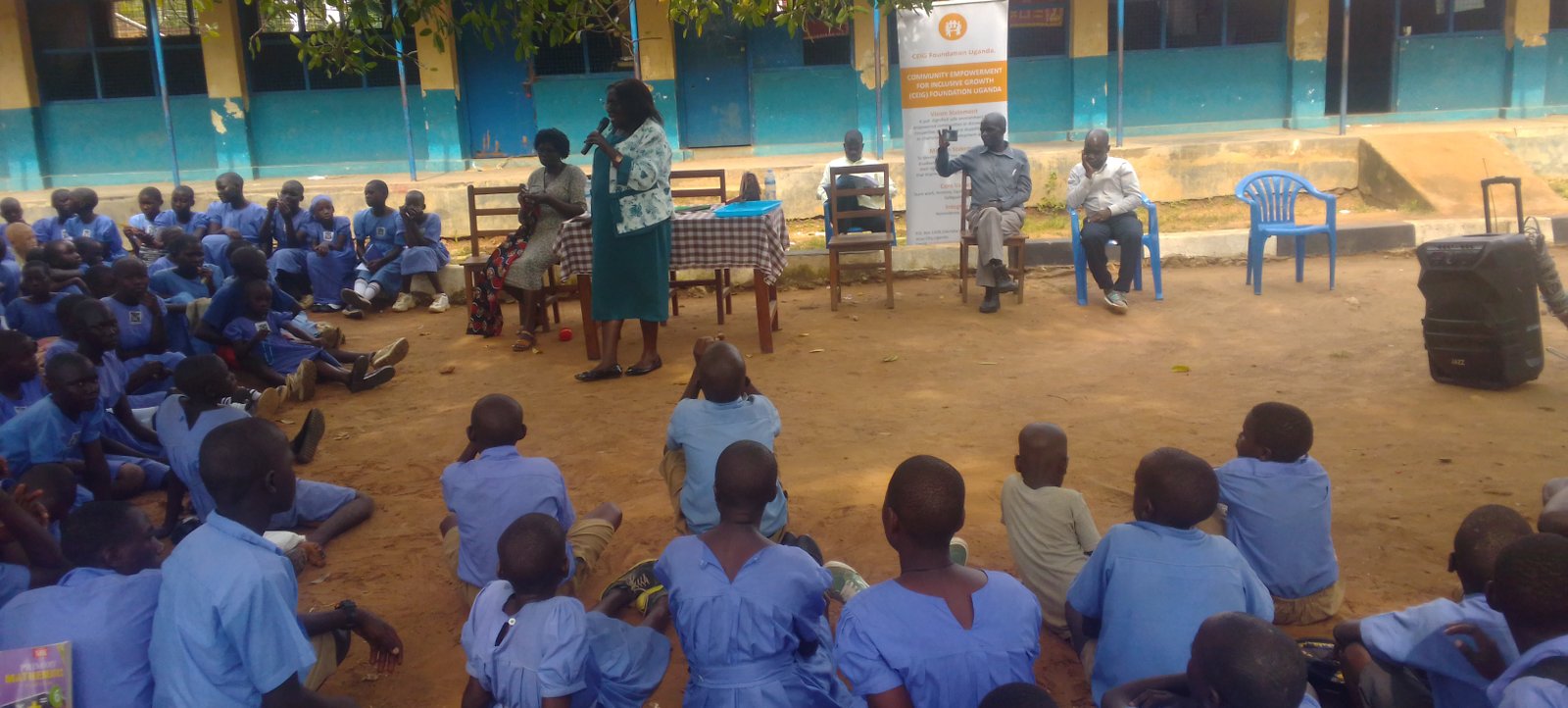
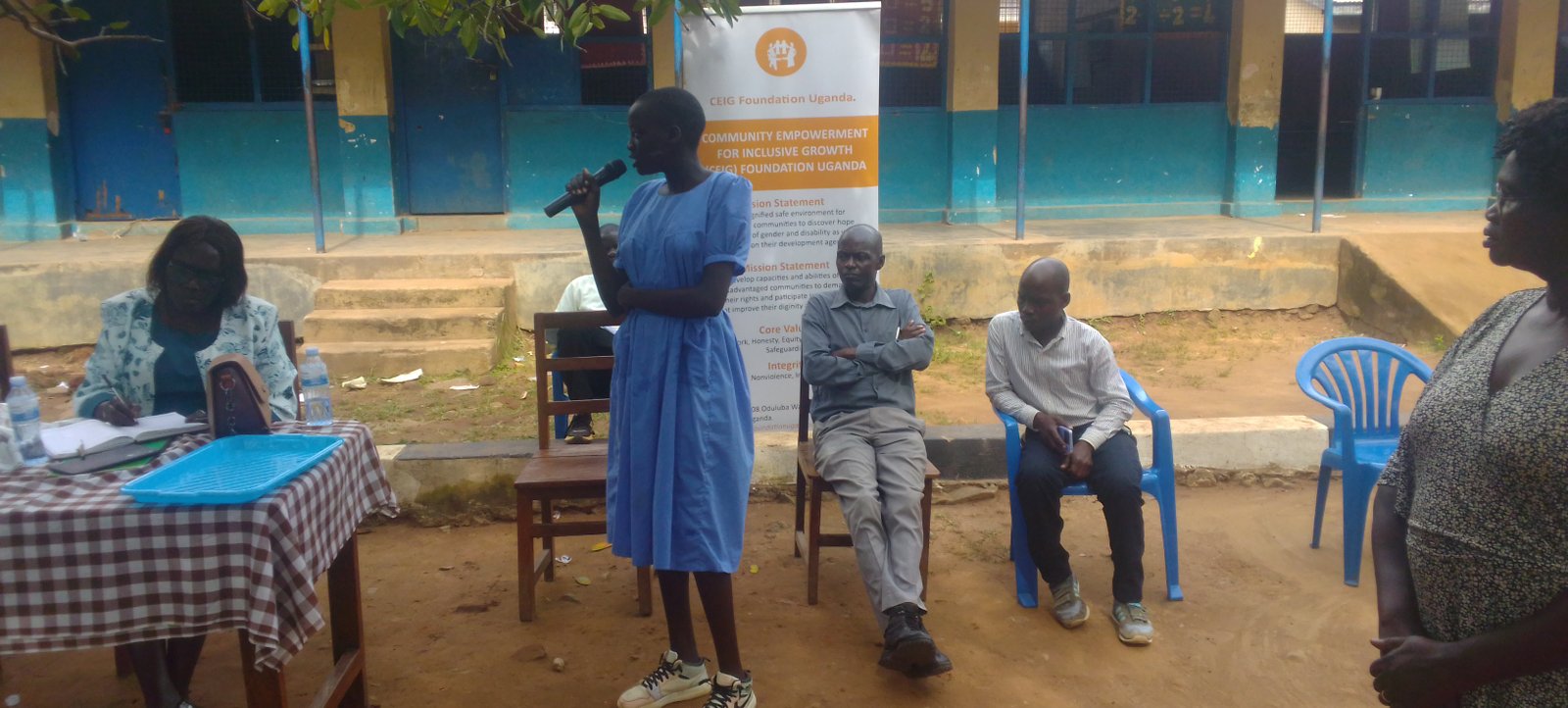
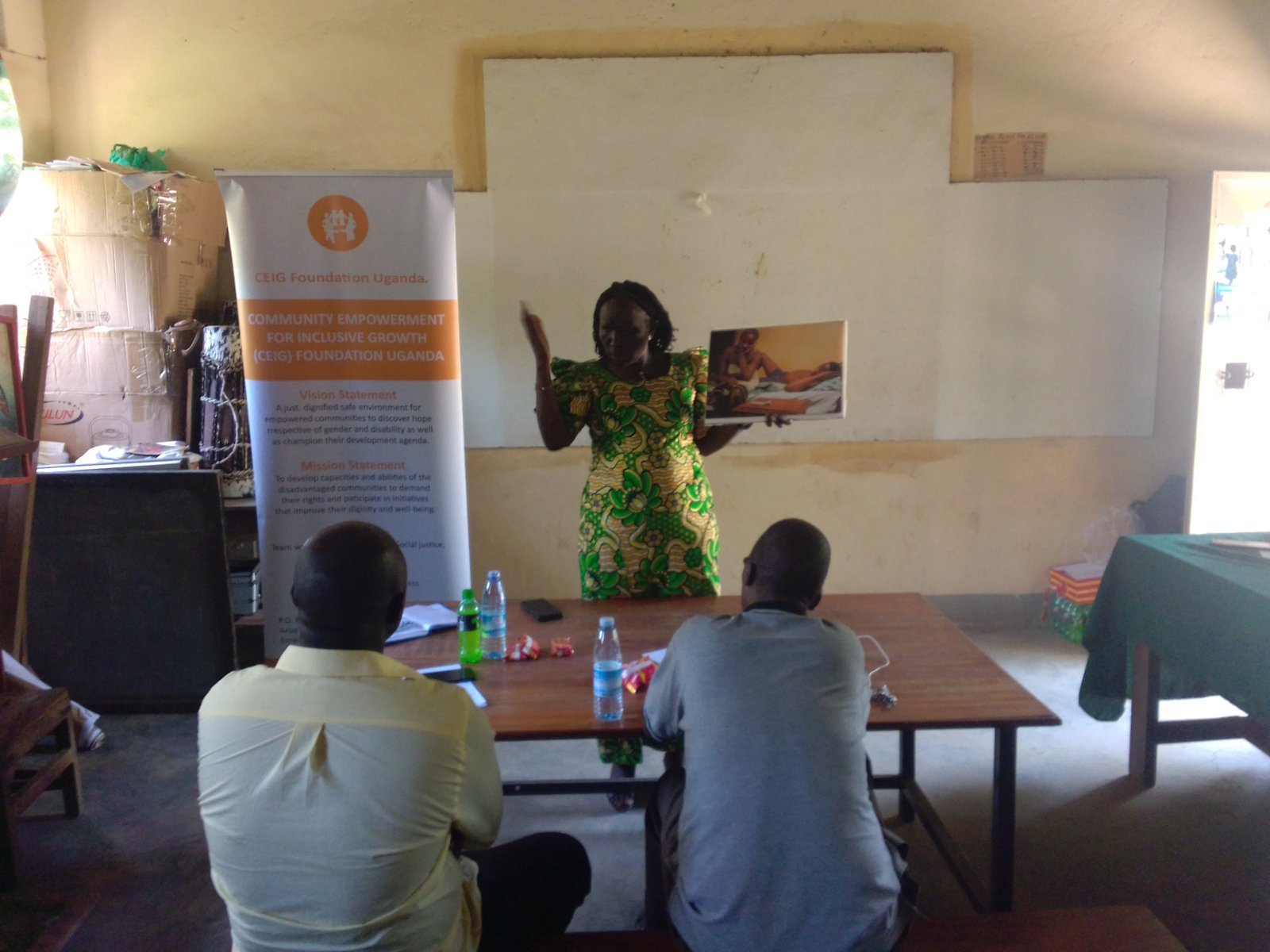
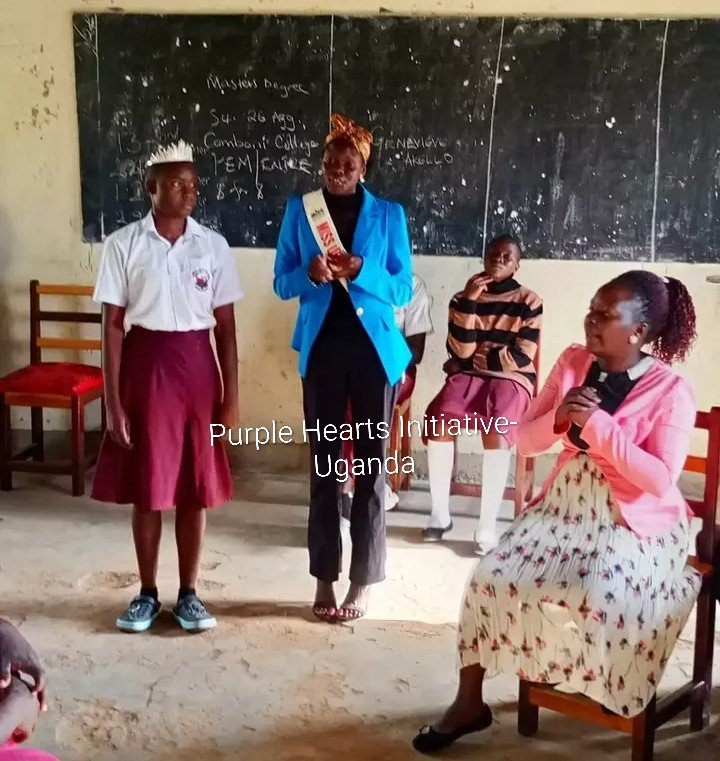
CEIG Foundation Uganda will organised SRHR session twice a term in year for among Primary School pupils with disabilities from their schools and provide them on the Sexual and Reproductive Health Rights (SRHR) of Girls and Women with Disabilities (GWWDs). The SRHR capacity-building sessions will focus on body growth and development, menstrual hygiene management, and web dreams, teenage or early pregnancies, e available SRH services, raising awareness about their rights and accessible health options The SRHR sessions would be facilitated by the Senior Man and Woman Teachers.
Annexed to the inclusive SRHR session in will be life skills session on basic life skills, with focus on Assertiveness, confidence, self -esteem and communication to report SRHR violations, ensuring they can seek support when needed.
A01.1.2: Produce, Adapt and distribute disability friendly Information IEC material among PWDS.
CEIG Foundation Uganda will Produce, adapt and distribute age appropriate and disability friendly Information Education, and Communication (IEC) materials tailored to the specific needs of persons with disability to facilitate access to relevant information on SRHR. These initiatives would be instrumental in fostering a more inclusive environment and ensuring s are informed, empowered, and supported in making decisions about their health and well-being Primary School pupils with disabilities from their schools
A01.1.3: Train key duty bearers on inclusive SRHR and education support at school.
The project will train duty bearers on such as health, education providers and community leaders on how to offer inclusive, respectful and accessible SRH services to Primary School pupils with disabilities.
Project Objective 2: Economic Empowerment for sustained education for persons with education
Output 2: Parents/guardians of person aware of their roles in education of children with disability and 20 most vulnerable parents of person with disability in school supported in livelihood alternatives.
Education for Persons with Disability has majorly been challenged and limited by poverty among parents of persons with disabilities, they lack adequate funds to constantly run lucrative livelihoods activities for instance poultry, piggery among others that need constant money for maintenance. Low self-esteem among parents who are persons with disabilities due to negative attitudes (community/social stigma) causes low participation of some persons with disabilities in community meetings and low community solidarity and support, some community members refuse to accompany persons with disability with difficulties to move to attend to educational and livelihood activities this limits access to such initiatives. Persons with disabilities are discriminated (stigma, prejudge) saying that they do wastes resources and therefore, there is no need to provide services.
Therefore, the project intends to carry out the following activities to facilitate the inclusive education for persons with disability in School;
A01.2.1: Awareness raising/sensitization of the communities and the children to curb discrimination, segregation to improve inclusive education for children with disabilities.
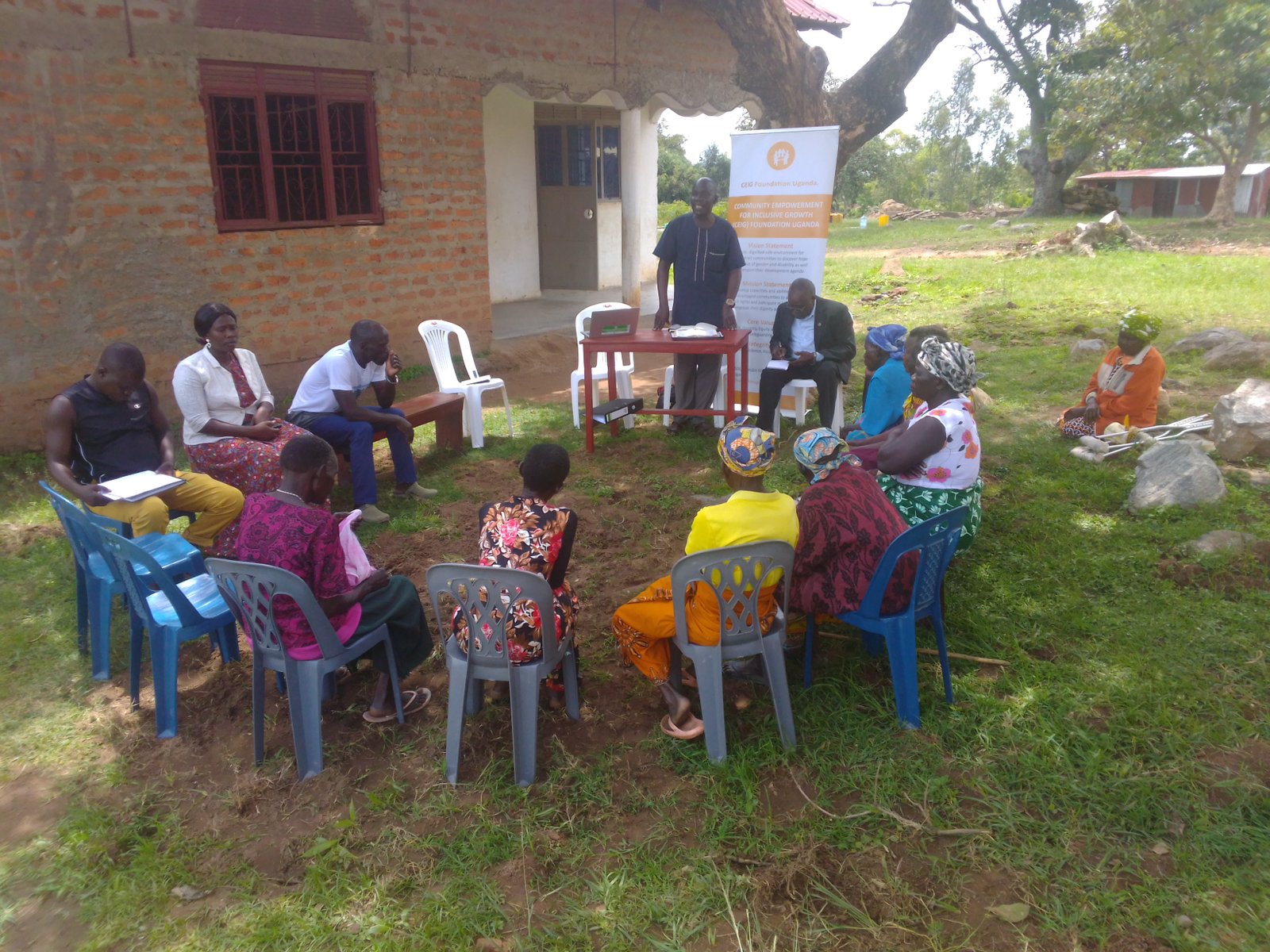
General school community sensitization involving community authorities, organizations representing people with disabilities through the community dialogue, meetings and participation of PWDs in world disability day will be conducted termly The community awareness campaigns will be conducted termly by Project Officers, on right and entitlement of Persons with disabilities, types of disabilities, respect full language, assistive devices, roles of communities in supporting persons with disabilities and challenges faced by persons with disability.
The community awareness intends to mobilize and empower the local school communities to;
1) Identify and support young person disability to enroll and re-enroll back to school.
2) Provide safe and dignified, inclusive household, community environment to person with disability by moving out negative attitudinal barrier at community level.
3) Facilitate community collaboration and partnership linkages for collective action planning for inclusive education.
A01.2.2: Facilitate parents/guardians of pupils with disabilities with livelihood cash grants of 600,000 Ugx to sustain the education of pupils with disabilities.
Parents/ guardians of the pupils with disabilities will be supported with seed cash grants to create or innovate livelihood initiatives based on their knowledge, capacity and abilities to conduct the livelihood enterprise selected. Prospective parents/ guardians of persons will be expected with support of the CEIG Foundation Uganda Staff and Office of Community Development Officer develop a business plans with demonstrable elements on years of experience of engagement in the enterprise selected or knowledge in the enterprise. The business plans will be reviewed and parent/guardians of the children with disabilities in school will be supported with cash grants of 600,000 Ugx to facilitate the sustainability of the educational journey of the person with disability. CEIG Foundation Uganda staff and local authorities will monitor the fund investment, provide business mentorship trainings and follow-ups.
This will significantly contribute to increasing productivity of the parents/guardian, reduce on the reliance on aid or grants from partners and government, fostering financial independence, and supporting long-term business growth.
A01.2.3: Follow-up and Monitoring:
To facilitate improvements, and learnings in the project implementation, action review activities will be conducted by the project team in order to address emanating gaps. Local church leaders, School Structures and local authorities will be engaged in joint project monitoring in the field to facilitate stakeholder participation and contribution to the project.
Conclusion: Persons with disabilities report a wide variety of barriers and factors of discrimination (attitudinal, communication, physical & institutional), to access services being provided in the settlement, services responding to the particular needs and priorities of persons with disabilities. Barriers to access these services persist due to distance, negative and discriminative attitudes and due to the way programs and facilities are designed. Persons with disabilities have limited access to information
on the available services offered and how to access these services, their rights and legislations. Some services being provided do not fully correspond to their diverse needs.
The Story
0 givers
Be the first to give!
What Givers Are Saying
Real words from people who've supported this drive.
No comments yet — be the first donor to leave one!